The false signal
Re-reading produces familiarity, not memory. Familiarity feels like knowing. It isn't.
Re-reading produces familiarity. Familiarity feels like knowing. It isn't.
The gap between I've seen this and I can produce this is invisible from the inside. It closes in the exam room. Usually too late.
Drill turns that gap into something you can measure.
Re-reading produces familiarity, not memory. Familiarity feels like knowing. It isn't.
You stopped at studied. You never reached verified. Without retrieval, the gap stays invisible.
The gap shows up in the exam room. Not before. By then it's too late.
Medical study made the problem obvious: close concepts, plausible wrong answers, and too much material to trust a feeling.
The first protocol was simple. Answer a small set. Restart on any mistake. Shuffle the retry. Only count it when every answer came back clean.
Drill is that protocol, made repeatable.
Short Runs of 7-13 Cards. Truths and Traps. One mistake restarts the Run - same Cards, different order - until the set survives clean.
No score. No "almost". A verdict.
Create Cards from your course material or generate them with AI through any LLM you already use.
Drill algorithm selects 7–13 Cards. Answer Truths and Traps. One mistake resets the Run.
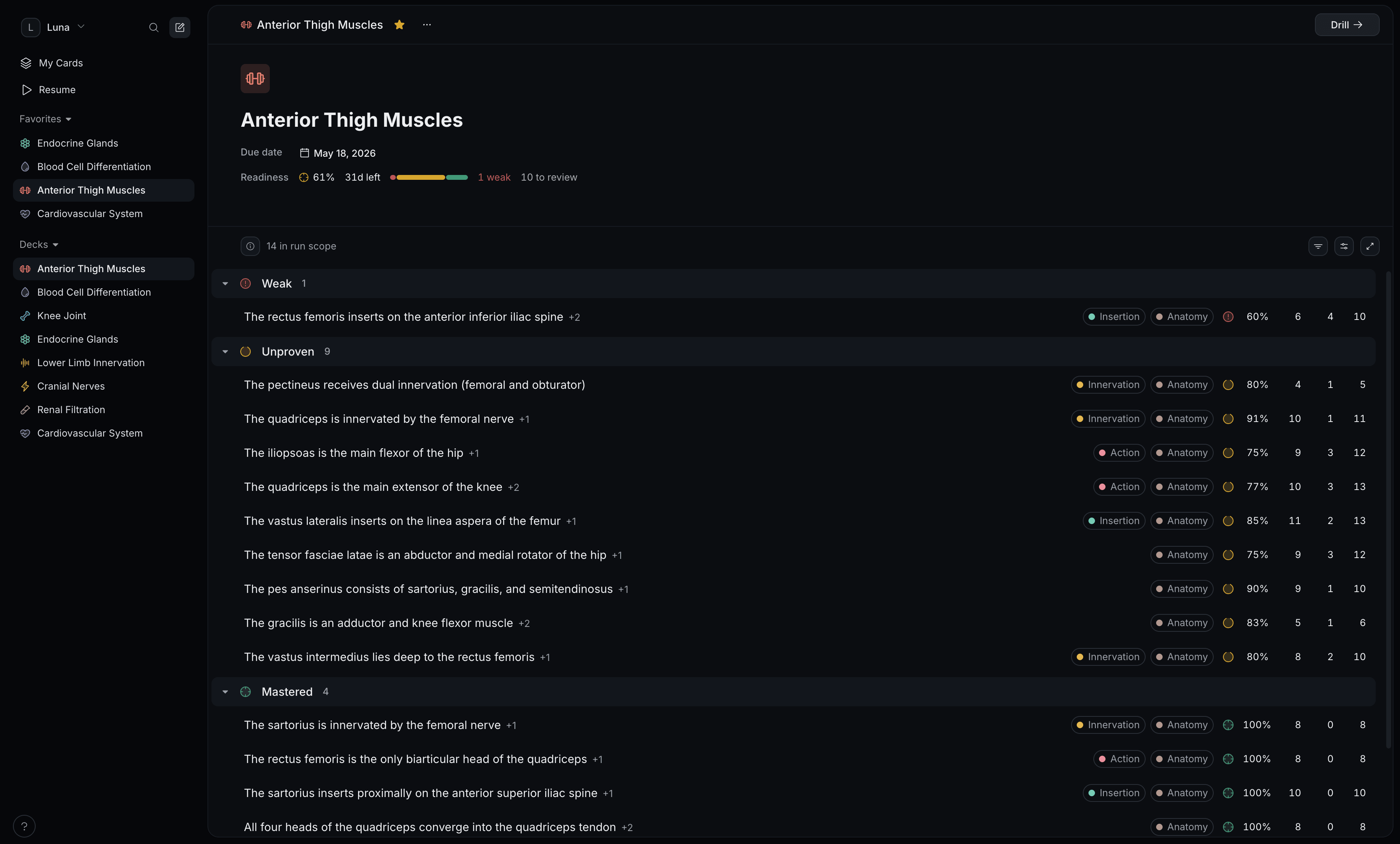
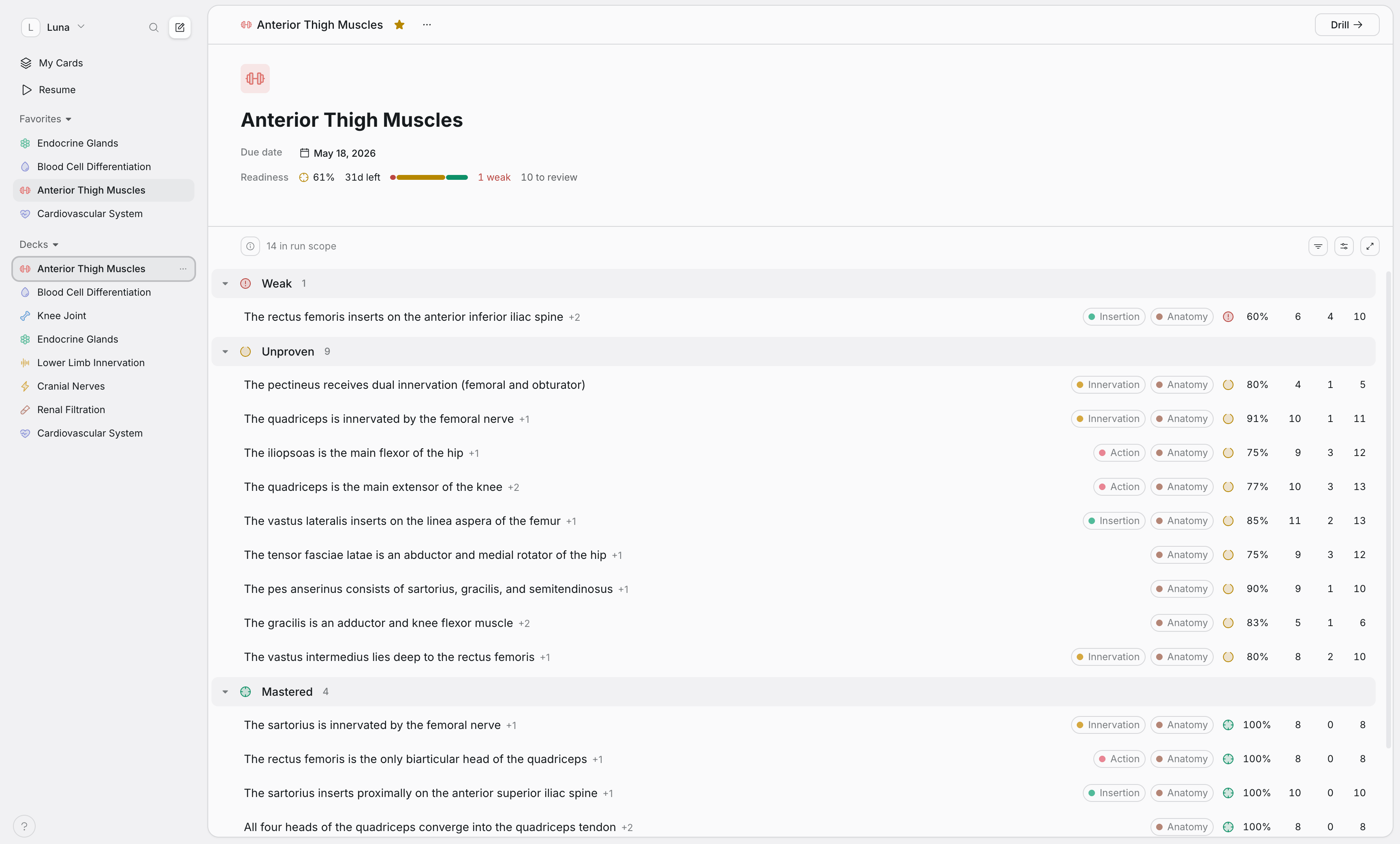
See exactly what's Untested, Weak, Building, or Mastered. No interpretation needed.
Use ChatGPT, Claude or whichever model you already trust as the place where rough material becomes a first draft.
Courses, Anki decks, transcripts, PDFs, or past chats can move through connectors into Drill without turning the workflow into copy-paste.
AI creates the material. Drill makes every Card inspectable, testable, and ready to prove under pressure.